Skip links

Basilica San Marco
and the Doge's Palace

Exclusive Services

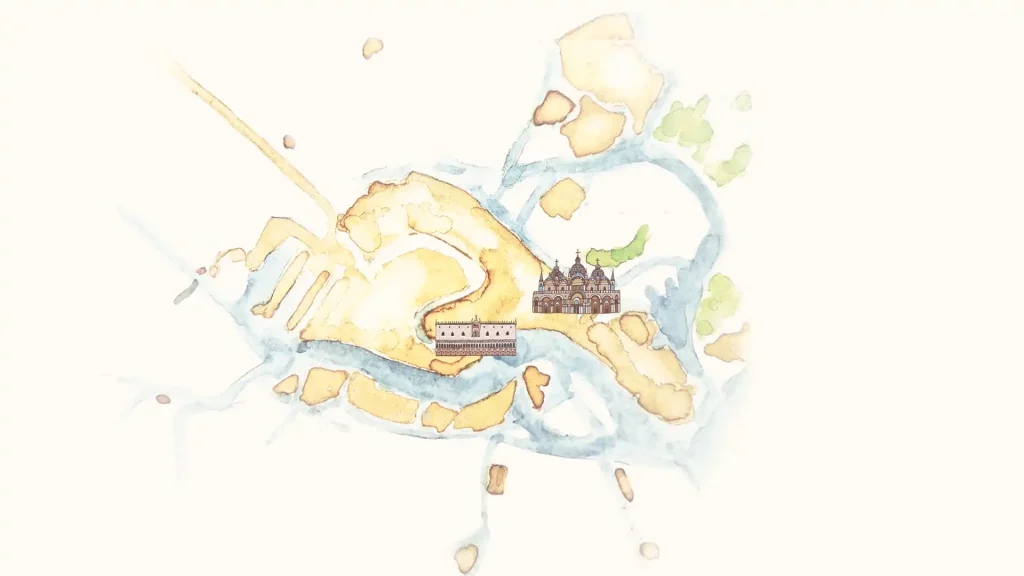
The tour will start in San Marco at 09h00 a.m. and will include a visit to the Palazzo Ducale as well as the full visit of the Basilica of San Marco. A private dedicated guide will introduce our guests to the heart of the history of our “Repubblica Serenissima” . The Piazza San Marco, the Basilica, the Palazzo Ducale and the Marciana Library without a doubt represent the essential attractions of the city. For any visitor to Venice, and certainly one visiting for the first time, they are an absolute must. With this guided tour of two hours (recommended three hours for an exhaustive visit to the Basilica’s Loggia and State Prisons) you will ease into Venice’s history through its.

Hours

2

Where

San Marco | Doge's Palace

Multilanguage

Italian - English

People

+10

The magic of Venice

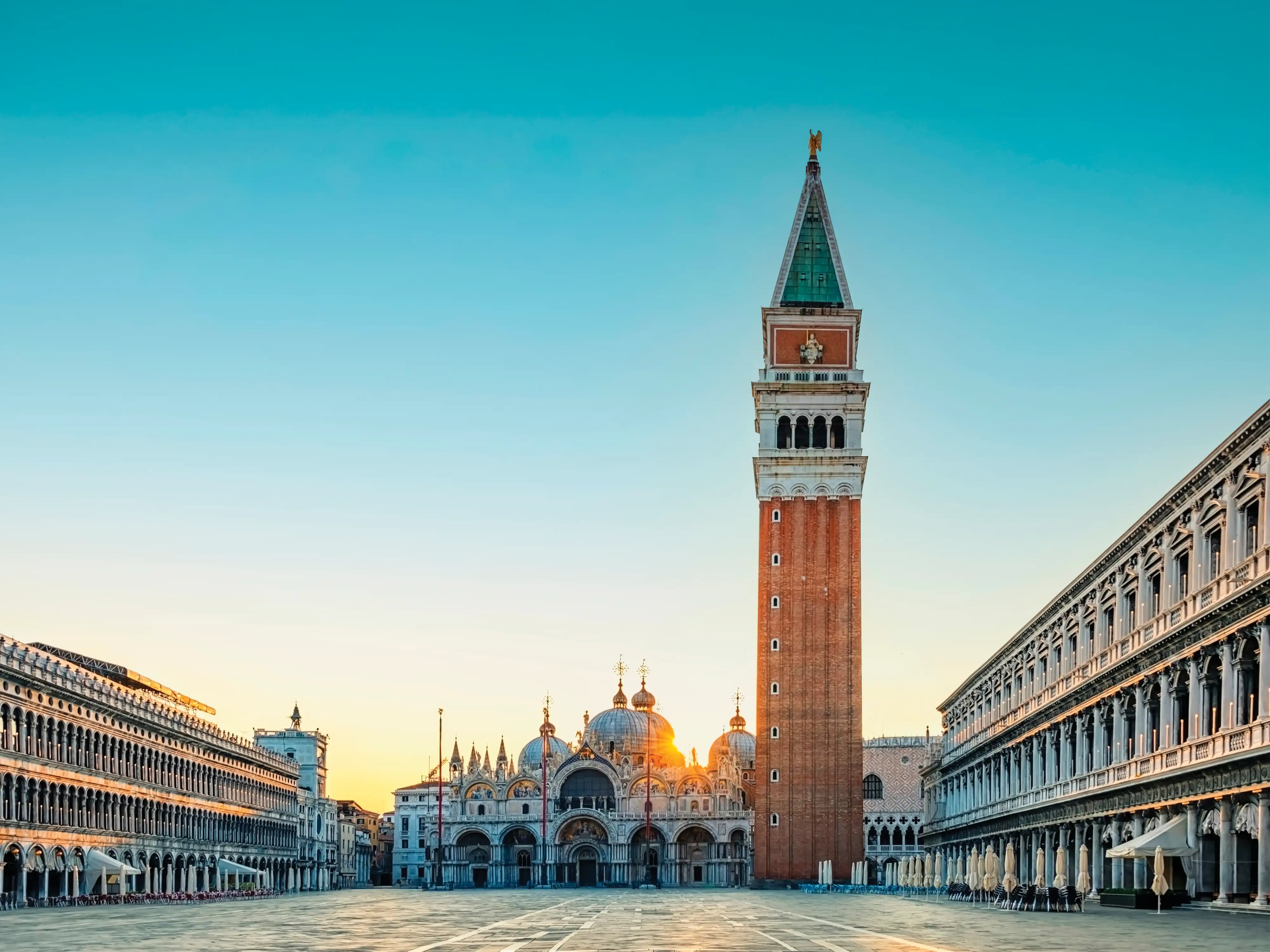
The buildings facing Saint Mark Square and the nearby Piazzetta represent the seat of the power of La Serenissima from its foundation in the 9th century, through the age when it grew to dominate the Eastern Mediterranean and stretched its influence far beyond. Its present form is substantially that of the 16th century Doge Andrea Gritti, whose far-sighted ideas moved the existing stalls, shops and markets to the Rialto and established in their place the Marciana Library, a masterpiece of stately design by Jacopo Sansovino. 

His work was, in turn, the inspiration for the civil-service offices that look down on the Piazza San Marco (the Procuratie) now occupied largely by the Museo Correr.

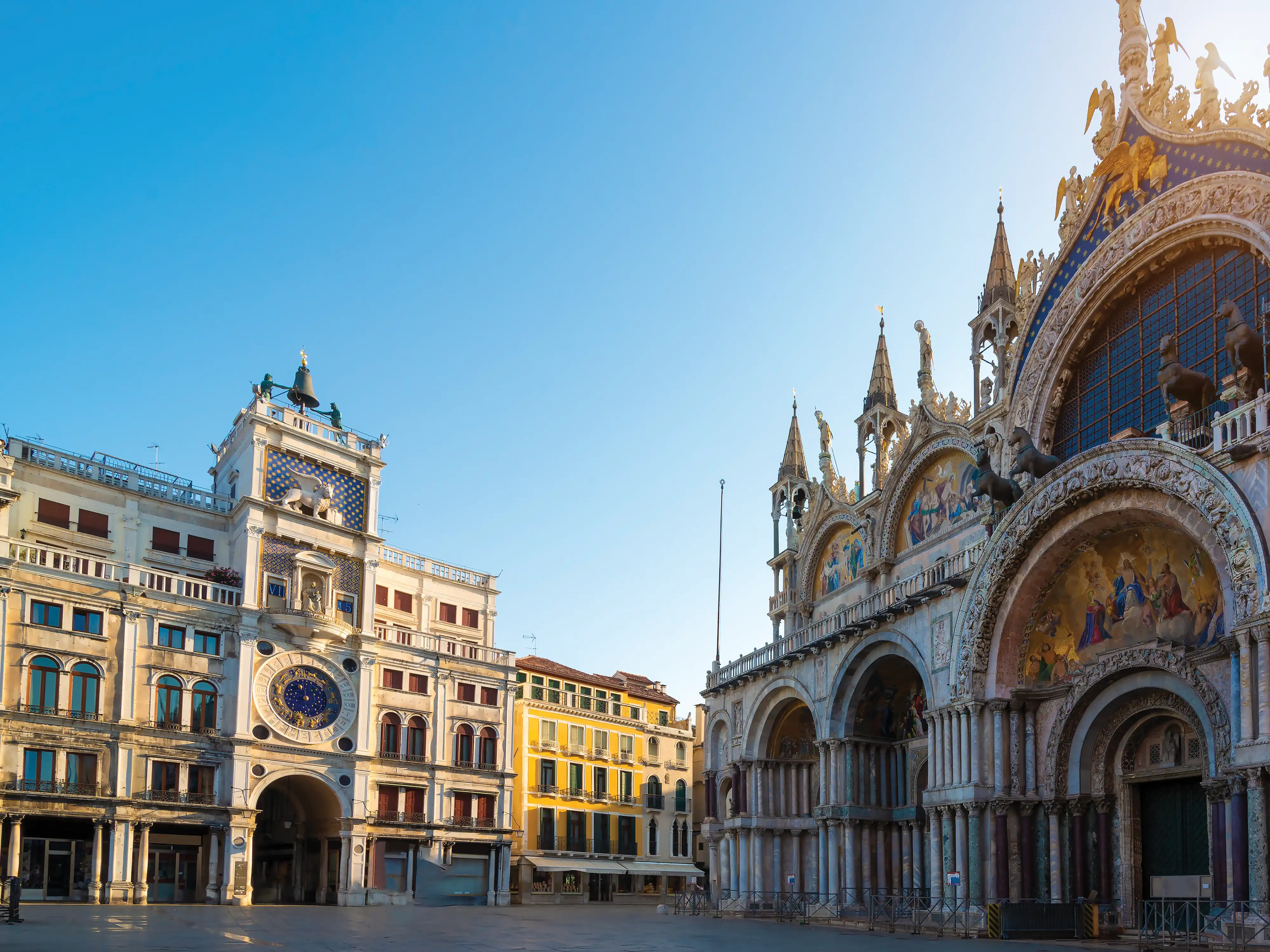
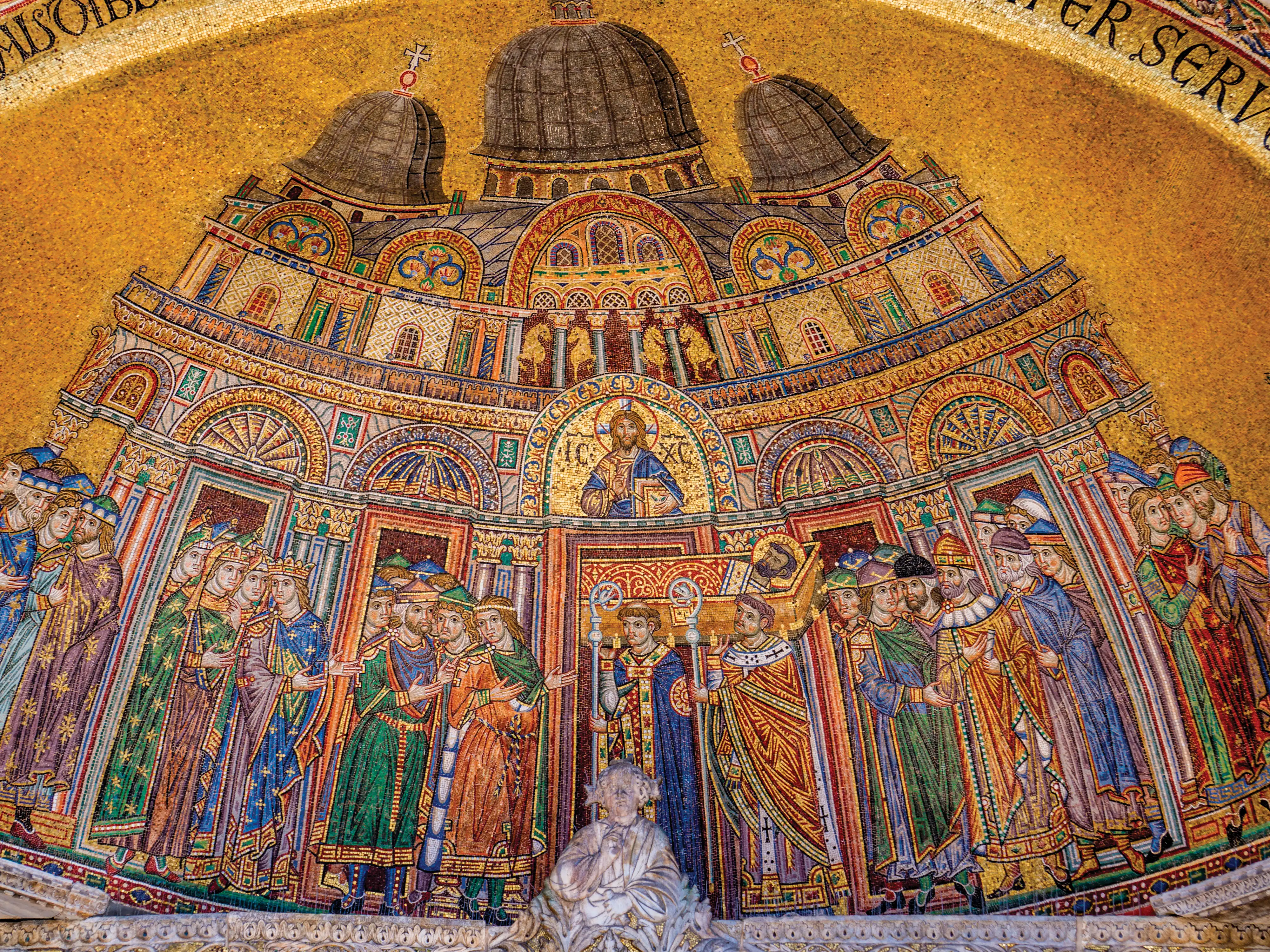
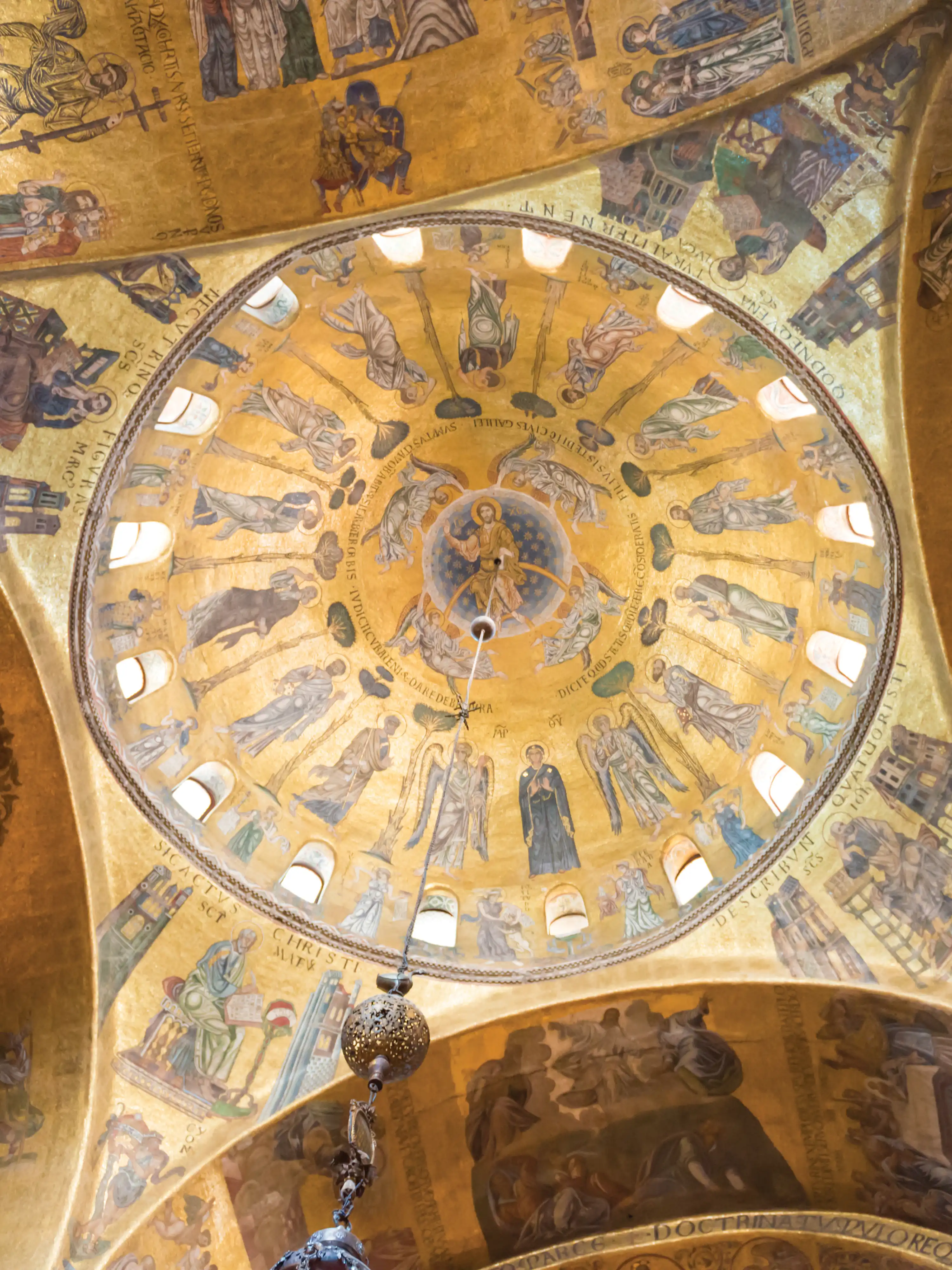
However, the supremely dominant attraction of the Piazza is the Basilica of St. Mark itself, the most significant example of Byzantine architecture in Western Europe. It was begun in 832 AD as the private chapel of the Doge, incorporated into the Ducal Palace itself. Here the remains of St. Mark himself, ‘rescued’ from Alexandria in Egypt a few years previously, were laid. A witness to the power and wealth of the city, here the great ceremonies of state were celebrated, as many paintings testify.  Now it is the seat of the Patriarch of Venice, while its vastness, the four thousand square metres of mosaic and the deep gold of the walls and domes astonish and humble the visitor. The mosaics represent ‘the Bible of the poor’, to be both an embellishment of the basilica and lessons in the faith of the Old and New Testaments. There is material for hours of study, but recommended above all, after the basilica itself, is the Pala d’Oro, the Museo della Basilica and the Loggia, from which you can share the view of the four famous horses, the Quadriga, as they look down over the Piazza. From the Loggia you can also enjoy a fine view of one face of the Ducal Palace and the basin beyond. The horses on the Loggia are not the originals. You can see these in the museum, fine examples of ancient Greek gilded bronze.  They are difficult to date, perhaps second or third century BC, and may have been part of an even greater work, one of Apollo driving his chariot across the heavens. The museum also displays a collection of tapestries and examples of original mosaics removed during restoration in the 19th century.


We build and activate brands through cultural insight, strategic vision, and the power of emotion across every element of its expression.

1200

Years of
story

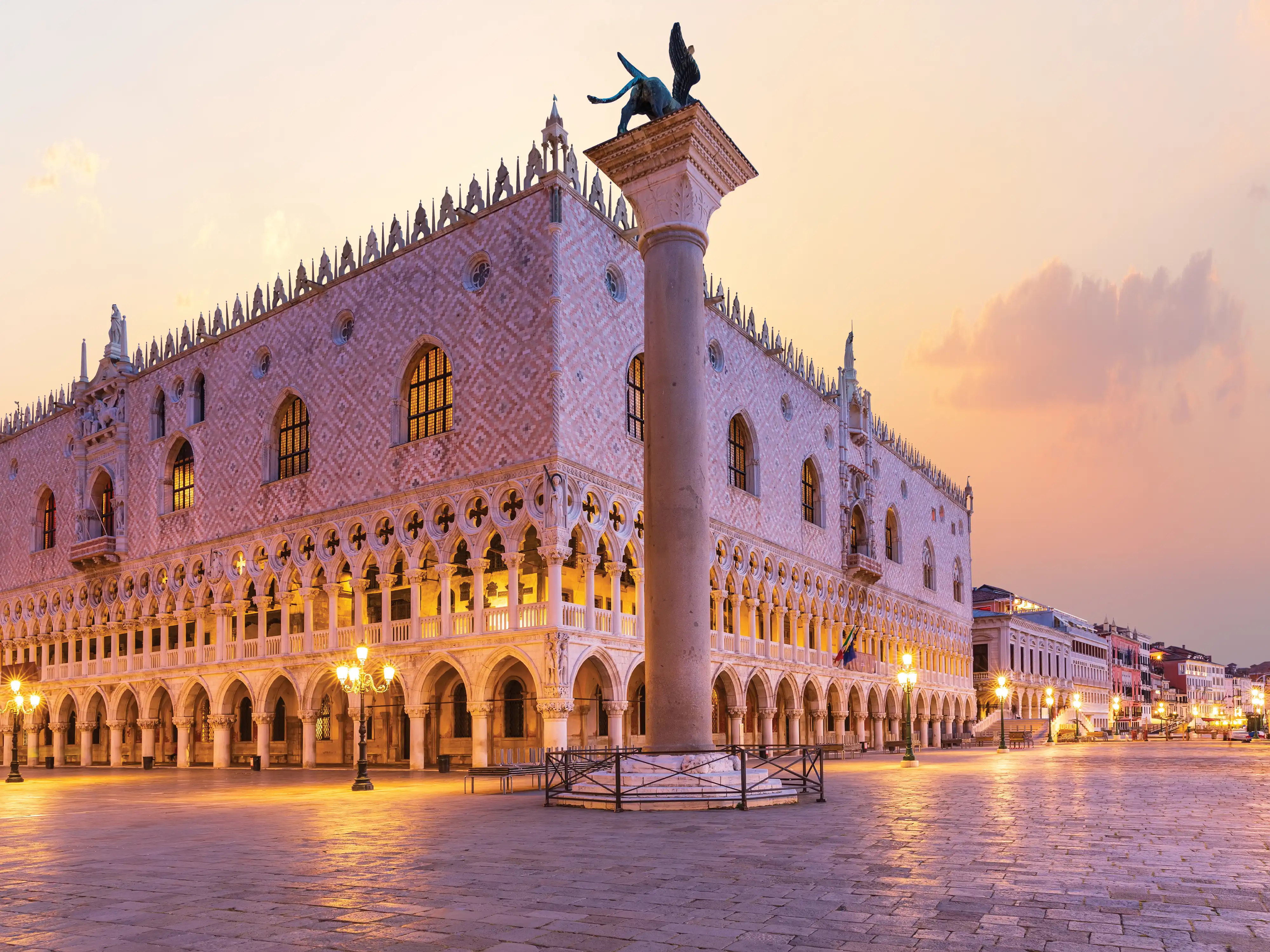
The Doge's Palace

Our final obligation is the visit to the Ducal Palace. 

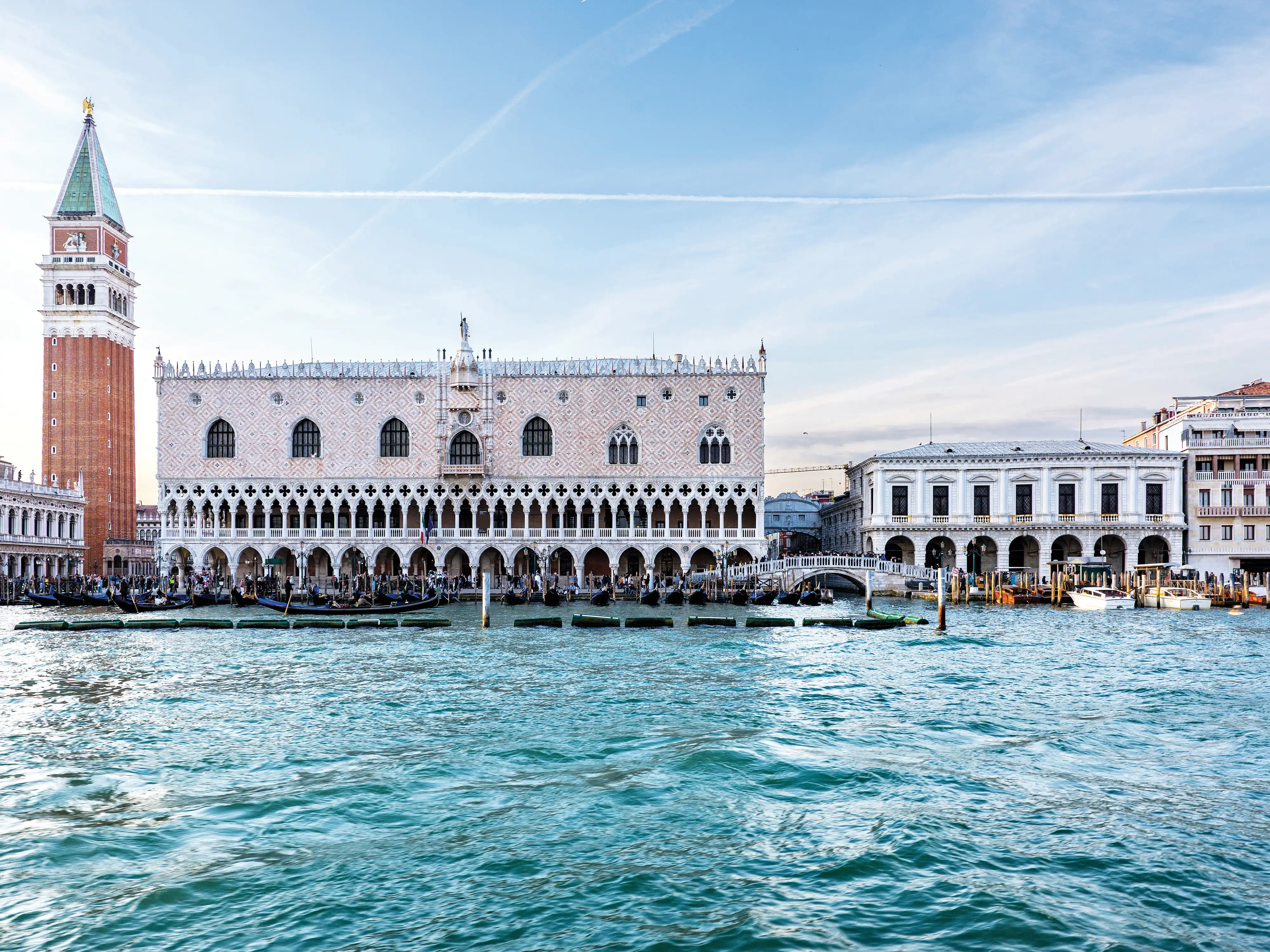
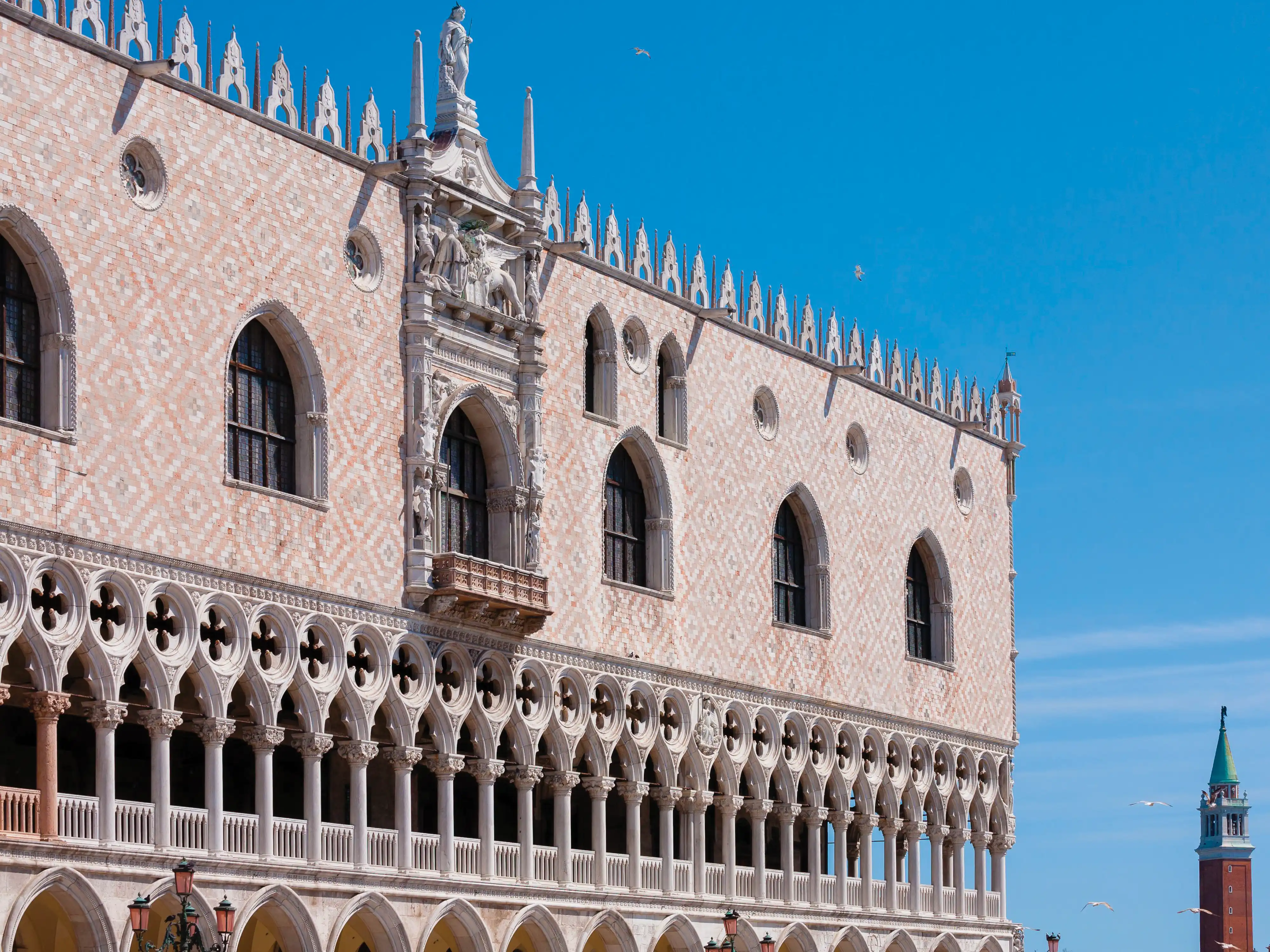
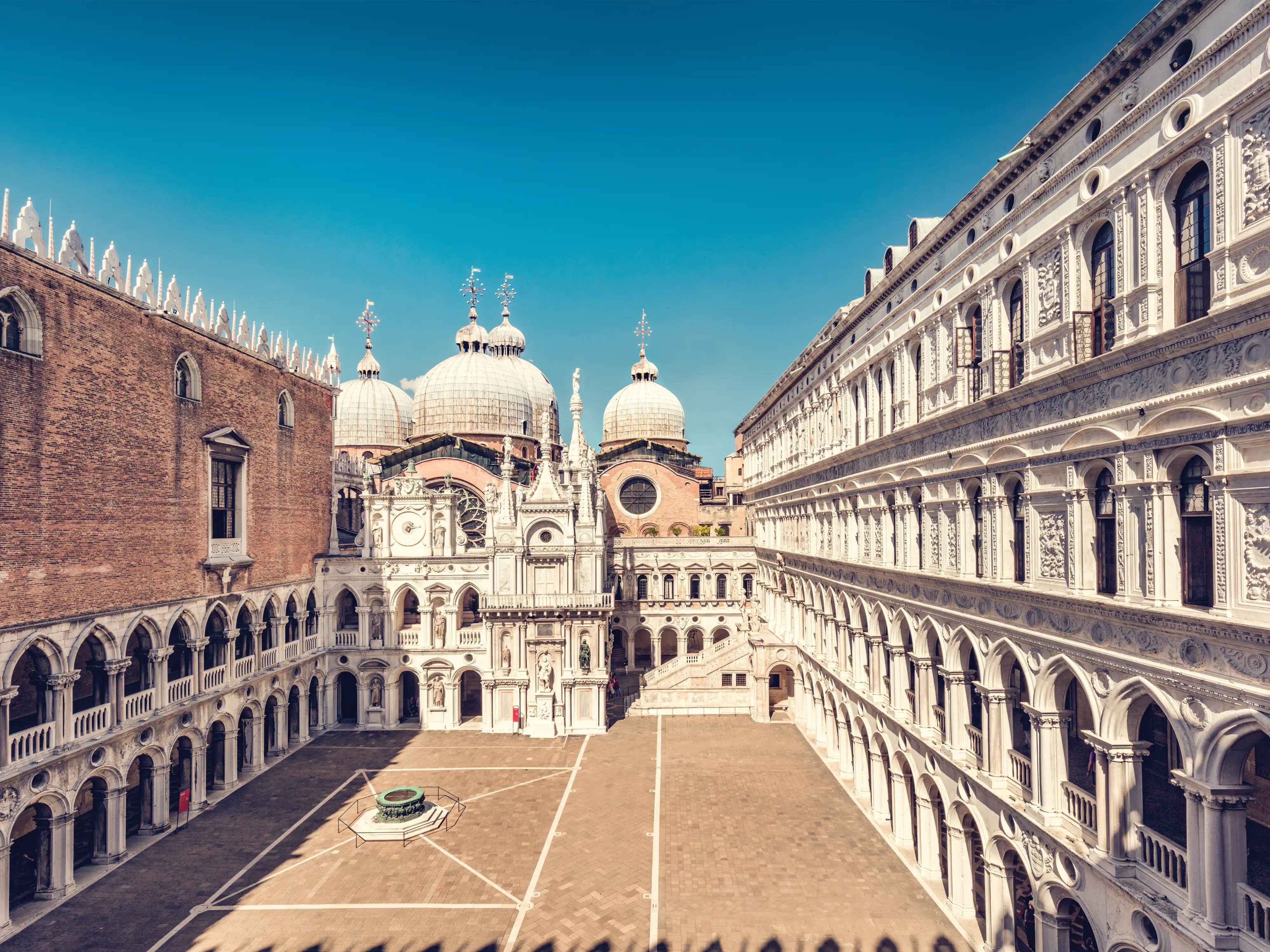
First built in the 9th century as a moated fortress, what we see today is the result of a complete rebuilding in the 1340s in an elaborate gothic style. The long monumental facades, facing the Library and the basin, constitute a formidable example of elegance and functionality. 

Their originality is the reversal of the more usual architecture which sets lighter elements above the heavy: here an elegant colonnade is topped by the massive masonry of the upper floors. The functionality is in the avoidance of the chill from the water invading the great chambers where various councils sat, including that of the Chamber of the Maggior Consiglio, which counted almost 2500 members, a space that occupies on its own a large proportion of the Palace. 

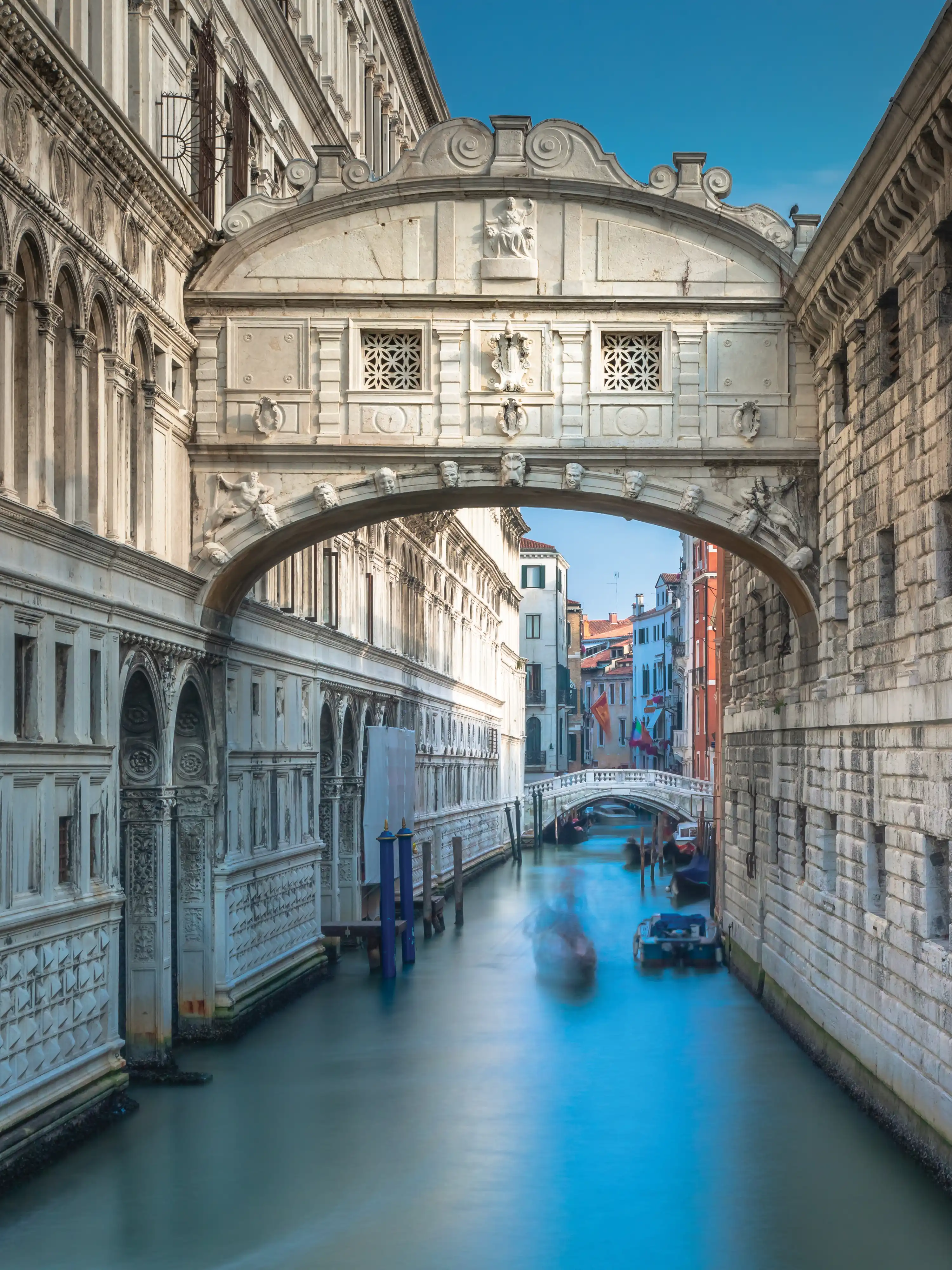
With no columns to support the ceiling, it is still one of the largest single-span spaces in Europe. While the exterior of the Palace is late mediaeval, the interior is essentially late renaissance; frequent fires have destroyed large parts of the original.  The last major fire in 1574, however, had a ‘fortunate’ effect because Paolo Veronese and Jacopo Tintoretto, and later their sons, were commissioned to paint new canvasses for the great chambers (Chamber of Pien Collegio). Equally significant restoration was carried out by Andrea Palladio (the Room of the Four Doors). Here also there is a portrait by Titian of the Doge Antonio Grimani, which also survived the fire since it was still in the artist’s studio at the time. You will also be able to see, in the hall of the Magistrati alle Leggi, several paintings by Hieronymus Bosch, the only ones in Italy.  Touring the Palace, it is well to reflect that of all Venice, the Ducal Palace suffered most from the depredations of Napoleon during the nine years of his reign in Italy. Your tour of the palace will conclude in following the footsteps of prisoners of the state across the Bridge of Sighs to the ‘New Prison’.

In perhaps 4 hours you will have been led through a millennium of the history of Venice. But history continues, and as we step out of the Palazzo Ducale onto the waterfront, it will be appropriate to discuss some of the problems of Venice today, especially if you have encountered one of the not infrequent incursions of the lagoon into Piazza San Marco. Few steps in the San Marco area with the guide.

This website uses cookies to improve your web experience.
Explore
Drag